
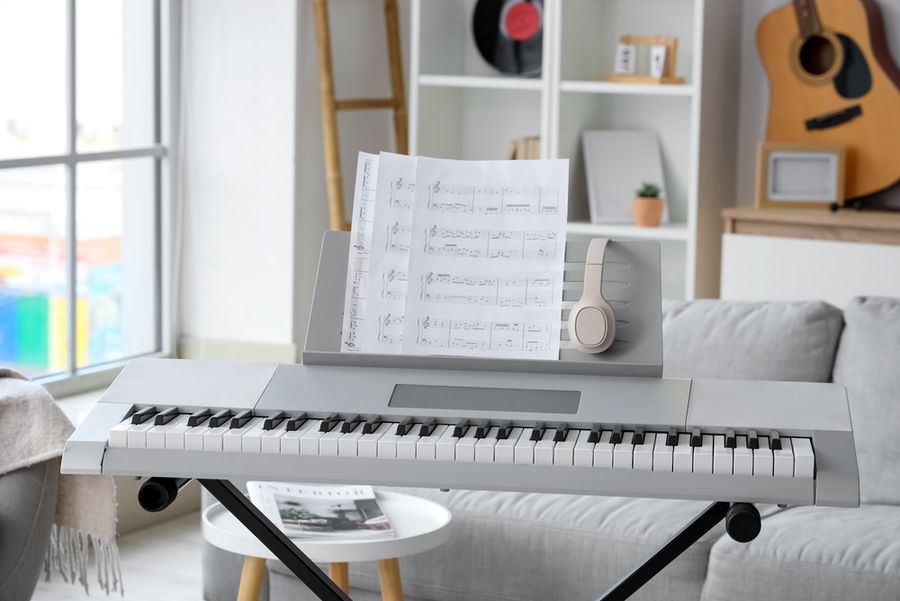
Creating a dedicated music room doesn't require a large house or an enormous budget. Whether you play instruments, record music, or enjoy listening to your favorite albums, thoughtful furniture choices can make a smaller room comfortable and functional. From foldable desks to storage benches, the right furnishings help organize equipment, protect valuable instruments, and preserve enough open space for practicing, recording, or simply kicking back for a listening session.
1. Wall-Mounted Folding Desks for Recording and Music Production
A traditional desk can occupy valuable floor space, particularly when a music room also accommodates keyboards, amplifiers, or recording equipment. Wall-mounted folding desks provide a compact alternative by creating a temporary work surface that can be folded away between sessions. They work especially well for musicians who primarily use laptops, headphones, and smaller audio accessories.
Some designs include integrated shelving, allowing users to organize notebooks, cables, and other essentials without adding another piece of furniture. When choosing a folding desk, consider the available wall space, mounting requirements, and weight capacity. Heavier equipment, including studio monitors, may require a more substantial workstation.
2. Vertical Shelving Units for Music Collections and Accessories
Vertical shelving makes use of wall space that might otherwise remain empty. Tall, narrow bookcases can hold sheet music, instructional books, headphones, and small accessories while leaving more floor area available for instruments. Adjustable shelves are particularly useful when organizing objects of different heights.
Modular cube storage offers another practical option. The KALLAX shelving range includes configurations that can be arranged vertically or horizontally, with optional inserts for organizing smaller items. Musicians can dedicate individual compartments to different equipment categories, making frequently used accessories easier to locate.
Before purchasing, measure the depth of larger items and check each shelf's load capacity. Heavy equipment should remain on appropriately rated lower shelves, and tall furniture should be securely anchored according to the manufacturer's instructions.
3. Storage Benches That Combine Seating and Organization
A storage bench serves two purposes without requiring separate furniture for each. It provides additional seating while concealing accessories that might otherwise accumulate around the room. This arrangement can be particularly helpful for musicians who occasionally invite friends or fellow performers to practice together.
The storage bench options available for compact spaces demonstrate how seating and concealed compartments can be combined in one piece. A music room bench could hold spare instrument straps, protective covers, notebooks, or lightweight percussion accessories.
Choose a design with a comfortable seat height, adequate interior storage, and a lid that opens without obstructing nearby equipment. Although convenient for occasional seating, a general-purpose storage bench should not automatically replace an adjustable piano bench or drummer's throne.
4. Foldable Keyboard Stands for Flexible Practice Areas
Keyboard players can reclaim substantial floor space by choosing a folding stand instead of permanent furniture. These stands allow portable keyboards to be positioned for practice and moved aside afterward, making the same area available for other instruments or activities.
The KS-20X keyboard stand illustrates this approach. Its double-braced X-shaped construction supports compatible keyboards, while its adjustable height and folding design help musicians manage their available space. The manufacturer specifies a maximum supported weight of approximately 165 pounds, although instrument compatibility must still be considered.
When selecting a stand, prioritize stability, keyboard dimensions, and comfortable playing height. Leave enough clearance for pedals and proper leg positioning. Musicians who switch frequently between instruments may particularly appreciate a stand that can be folded and stored between sessions.
5. Rolling Storage Carts for Frequently Used Equipment
Rolling storage carts offer flexibility that stationary cabinets cannot provide. They can hold cables, microphones, tuners, headphones, and other everyday accessories while moving easily between different practice areas. This makes them particularly useful in rooms shared by several musicians or arranged for different activities.
The Seville Classics 3-Tier Steel Cart provides an alternative, with three adjustable wire shelves, a convenient handle, and four wheels, two of which can be locked. Musicians can organize recording accessories, maintenance supplies, and smaller equipment across separate shelves. Its steel construction also makes it suitable for heavier accessories, provided users observe the manufacturer's weight limits. Before purchasing, consider the cart's dimensions, wheel stability, and whether smaller items require additional storage containers.
6. Stackable Stools for Occasional Seating
Dedicated music rooms sometimes need additional seating for lessons, rehearsals, or listening sessions. However, keeping several conventional chairs in a small room can interfere with movement and instrument placement. Stackable stools provide a practical solution because they can be stored together when not needed.
Lightweight stools are particularly convenient for occasional visitors. Look for models with protective feet, stable construction, and appropriate seat heights. Models with padded seats can improve comfort during longer sessions. For musicians who regularly perform while seated, however, purpose-built adjustable seating remains preferable to basic stacking stools.
7. Compact Storage Ottomans for Listening Areas
A dedicated music room may also serve as a comfortable place to listen to recordings, study arrangements, or relax between practice sessions. Compact storage ottomans can provide casual seating, foot support, and concealed storage without requiring a large cabinet or additional chair.
For example, a lift-top storage ottoman can accommodate lightweight accessories such as headphones, folded blankets, or music notebooks. When selecting one, consider the interior dimensions, upholstery durability, and whether the lid opens easily in a confined space. An ottoman with a removable or hinged top can help keep the room organized without making everyday accessories difficult to reach.
Creating a Music Room That Works for You
Furnishing a compact music room requires balancing storage, comfort, and accessibility. Wall-mounted desks and vertical shelving preserve floor space, while folding keyboard stands and stackable stools allow the room's layout to change according to different activities. Storage benches, rolling carts, and ottomans provide additional organization without demanding separate furniture for every purpose.
Before purchasing, measure the room and identify which instruments and accessories need permanent locations. Prioritize furniture that supports your musical activities rather than simply filling available space. With thoughtful planning, even a modest room can become an organized, enjoyable environment for practicing, recording, and listening to music.